
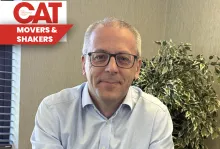
CAT sat down with GSF Car Parts CEO Steve Horne at the recent TechFest event in Coventry to discuss how the parts retailer is helping garages thrive in an increasingly polarised business environment.
CAT: GSF Car Parts’ second TechFest of the year took place at Coventry’s CBS Arena recently. What makes these shows unique?
Steve Horne: When we held our very first TechFest in 2024, we were surprised to see whole families attending. We really weren't expecting that, but it has grown organically. Even more turned up for our second event in 2025.
We realised we needed to cater to this audience, so we introduced wellness centres, kids' zones, and plenty of interactive elements. That approach is what makes GSF TechFest feel completely different from a standard trade show.
The feedback we receive shows attendees want the fun, food, and drink, but they also want genuine interaction with suppliers and our internal teams. It’s a format that will only continue to get bigger and better.
If you run a business in this sector, there is a lot to navigate right now. How are independent garages faring?
There is certainly plenty of change, uncertainty, and economic pressure, but the industry remains strong and is doing a fantastic job. Independent workshops are keeping mobility affordable by operating effectively in local markets for local customers.
Ultimately, that pressure pushes people to adapt and succeed. Ask any consultant or read any report—they all forecast that the independent automotive aftermarket will continue to gain market share.
People often underestimate the great job a local garage owner does. They are vital parts of their communities and build fantastic relationships with their customers. You routinely see generation after generation using the exact same workshop.
What key trends are changing the market today?
There is a clear polarisation happening. On one side, you have businesses investing, developing, and evolving with the industry. On the other, some garage owners say: “I’m just going to keep doing what I do. All this change happening around us doesn't interest me; I’m happy where I am.”
I respect that choice. There is room for both approaches. Some people write off those who don't want to embrace every new technology, but why should they? They play just as important a role in the market as anyone else.
TechFest featured Bosch demonstrating hydrogen tech and Delphi highlighting its 'Make Some Noise' braking campaign. How important is supplier support in keeping workshops up to speed?
As a distributor, part of our role is connecting technical developments from suppliers directly to our customers, providing that crucial support bridge.
People frequently underestimate this industry. I remember when vehicle diagnostics were first introduced and critics claimed the independent aftermarket was dead. Yet, workshops always find a way and consistently adapt.
It’s a changing market for GSF Car Parts as well. How is the company adapting?
We are challenging the status quo, collaborating with suppliers, and translating upcoming industry changes for our customers. We aren't just here to supply parts; we are supporting workshops through a complex transition period.
This extends down to daily operational basics like cash flow, which directly affects a garage's credibility. For instance, when we collect a return at a workshop, it is scanned and credited instantly. We give the customer the benefit of the doubt, removing that financial stress straight away.
We’ve also developed a new catalogue system designed to get the correct part right the first time. By moving to an OE-based standard, we’re improving accuracy and adding tangible value for the customer.
You’re leveraging advanced technology behind the scenes, including indoor drones. How does that work?
At our primary distribution points, we have racking 50 metres high. Traditionally, teams on scissor lifts had to move up and down manually to check inventory. Now, autonomous drones fly along the aisles scanning pallet labels to perform live stock checks. It delivers much more accurate, real-time inventory management.
We are also implementing AI across the entire business, covering everything from operational processes to facility management. While much of it remains confidential, our goal is to accurately predict required repairs so we always hold the right stock locally. We’ve invested heavily in building those predictive models.
GSF previously opened new branches at a rapid pace, but that rollout appears to have moderated. Have you reached critical mass?
No, we are nowhere near that yet. The pace has slowed slightly, but we still have five or six years of branch openings ahead of us—I’ve practically become a professional ribbon-cutter!
Following a detailed network study, we are currently at around 270 sites and anticipate maxing out between 280 and 300 branches.
What excites me even more is the performance of our established footprint. Branches opened pre-2023 are experiencing double-digit growth, compared to wider market averages of 3% to 4% at best.
Looking ahead, is there reason for optimism in the aftermarket?
Absolutely. The vehicle park is becoming more diverse with varied drivetrains and new Chinese entrants, but this will stabilise into a healthy mix of major brands. Overall repair volume will continue to rise, particularly as features like ADAS become integrated into the MOT.
Market studies consistently show market share shifting toward the independent sector. We are also seeing entirely new parts categories emerge around EVs that didn't exist previously. While EVs may feature fewer components overall, the average repair value is higher than that of an internal combustion engine. The work may evolve, but the opportunities are growing.



Go to comments