
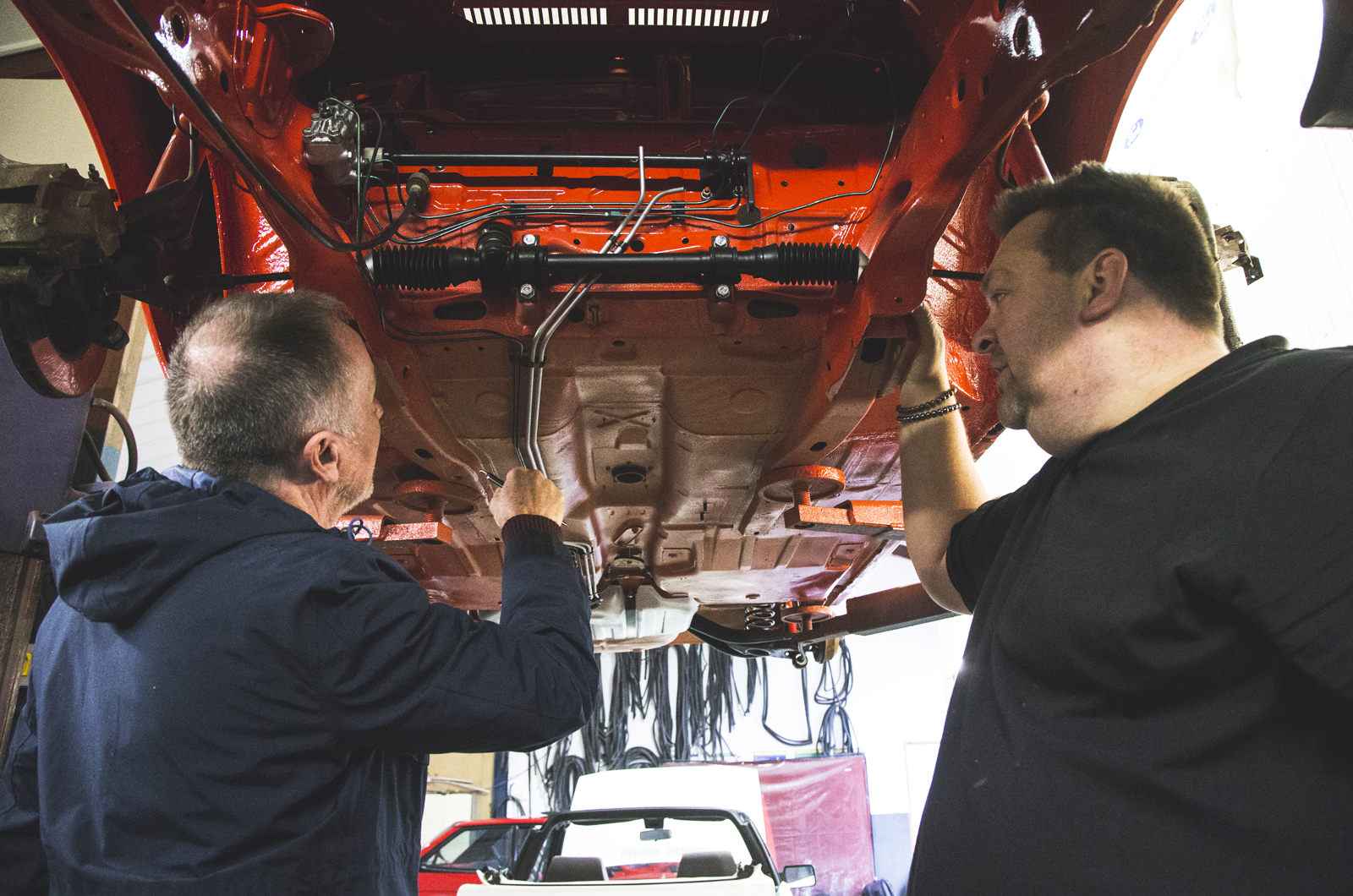
Several recent headlines have suggested that garages are being forced to the brink.
In February, sources reported that ATS Euromaster was to end UK operations (despite previously shutting 86 locations in an effort to cut costs), leaving more than 700 jobs at risk. The company blamed changing customer behaviour and competition.
Two months later a story suggested that local garages might be doomed as a result of spiralling costs and mobile repairers threatening small garages. This Is Money wrote that “independent garages will begin disappearing from Britain's towns and cities due to a perfect storm of rising costs, an ageing workforce, shifting consumer demand and the accelerating transition to electric vehicles”.
Tough conditions
Mark Field, chief executive of the IAAF, is aware of the issues. “While most of our members are seeing upward growth, running an aftermarket business in the UK is extremely tough,” he said. “Getting the right people, securing the right facilities and navigating the red tape makes everything more difficult.”
Likewise, Jonathan Douglass, director of the Independent Garage Association, says his body is aware that “conditions for independent businesses are challenging when you factor in the current economic climate, which is creating an increasingly cost-sensitive consumer”. Among the challenges, he specifically cites business rate hikes, complex employment law and compliance rules, and rising fuel, energy, rent, labour and equipment costs.
And it’s something that Simon Hooper, director of Broadstairs MOT Centre, is bothered by. Referring to equipment calibration, paying for accredited staff and training, rising insurance premiums, and tooling and technology, he said costs as “a responsible garage owner” are troubling him.
He thinks that “more garage owners are choosing to retire, sell the freehold for development, or resist the necessary investment [for] tooling, tech and training”.
Field seems to agree when he says that “by 2030, you will see fewer independent garages”. He reckons that “those that remain will be bigger and present themselves more professionally” and that there will be more “multi-branch operations”.
Adapt of die
Andy Wells, owner of Autoworks HQ, has faced his own trials. As well as general cost rises and industry challenges, he had his lease cancelled at short notice.
“Within a month we had to find new premises, negotiate with existing tenants, move sites and try to retain our customers,” Wells explained. “The new site was only a mile or so away, but the planning, logistics and admin involved in the move were unbelievable.”
He clearly had to adapt or die. And, similarly, because of rising costs and pressures, Mark Kettle, owner of EAC Telford, says that he “had to evolve to stay competitive”. He explains that the business sought out “new partnerships, more expertise and strategically aligned” across its sites.
He also had to close one site because “it was pointless keeping it open when we knew we could have more impact across three rather than four sites”.
Hooper, though, is angry. He said: “I am totally disenchanted with the industry and successive Governments who have failed to address the ticking skills crisis time bomb. We have been unable to recruit a senior tech for the past 12 months. We have five ramps, but only two techs and myself.” And he says the failure to increase the MOT fee isn’t helping.
Field thinks that the Government can help independents. He wants existing legislation, such as the motor vehicle block exemption order, enforced. Plus, he – like Hooper – wants MOT-related change: a statutory minimum fee, fixed at the existing £54.85 maximum charge, to “allow garages to invest in the specialist equipment required for PN and NOx testing and for the Government to introduce this on diesel vehicles”.
Douglass, meanwhile, said: “The Government can help by better understanding the implications of their policy decisions on small and medium sized businesses who are often family run and owned.” He too is concerned by the MOT fee, saying: “This is one example where the Government can directly alleviate some of the cost pressures facing independent garages.”
Being agile
Garage owners are dependent on more than market shifts and customer behaviours. It’s why Wells thinks garages need to be agile to survive, “otherwise we become extinct”.
And while Kettle says that “we’re going from strength to strength”, he adds that “you’ve got to be able to stand back and assess the whole picture regularly otherwise you’ll get stuck”.
Field makes a couple of final points: “Investment remains key, particularly in people, technology and infrastructure. And garages need to think about ‘convenience as a service’, because customers continue to demand more from their vehicle servicing and repair experience”.




Go to comments